Most of us think we’re doing enough by brushing twice a day. We grab whatever toothbrush is on sale, scrub for maybe 45 seconds, and call it good. But your dentist knows the truth. Plaque hides in places standard brushing just can’t reach, and over time, that buildup leads to cavities, gum disease, and expensive procedures.
The good news is that upgrading your oral hygiene routine doesn’t require a medical degree. The right tools make professional-level cleaning accessible from your own bathroom sink.
This guide breaks down the most effective, usable home-based dental tools on the market. We will explore why they work, how to use them, and which ones deserve a spot in your medicine cabinet.
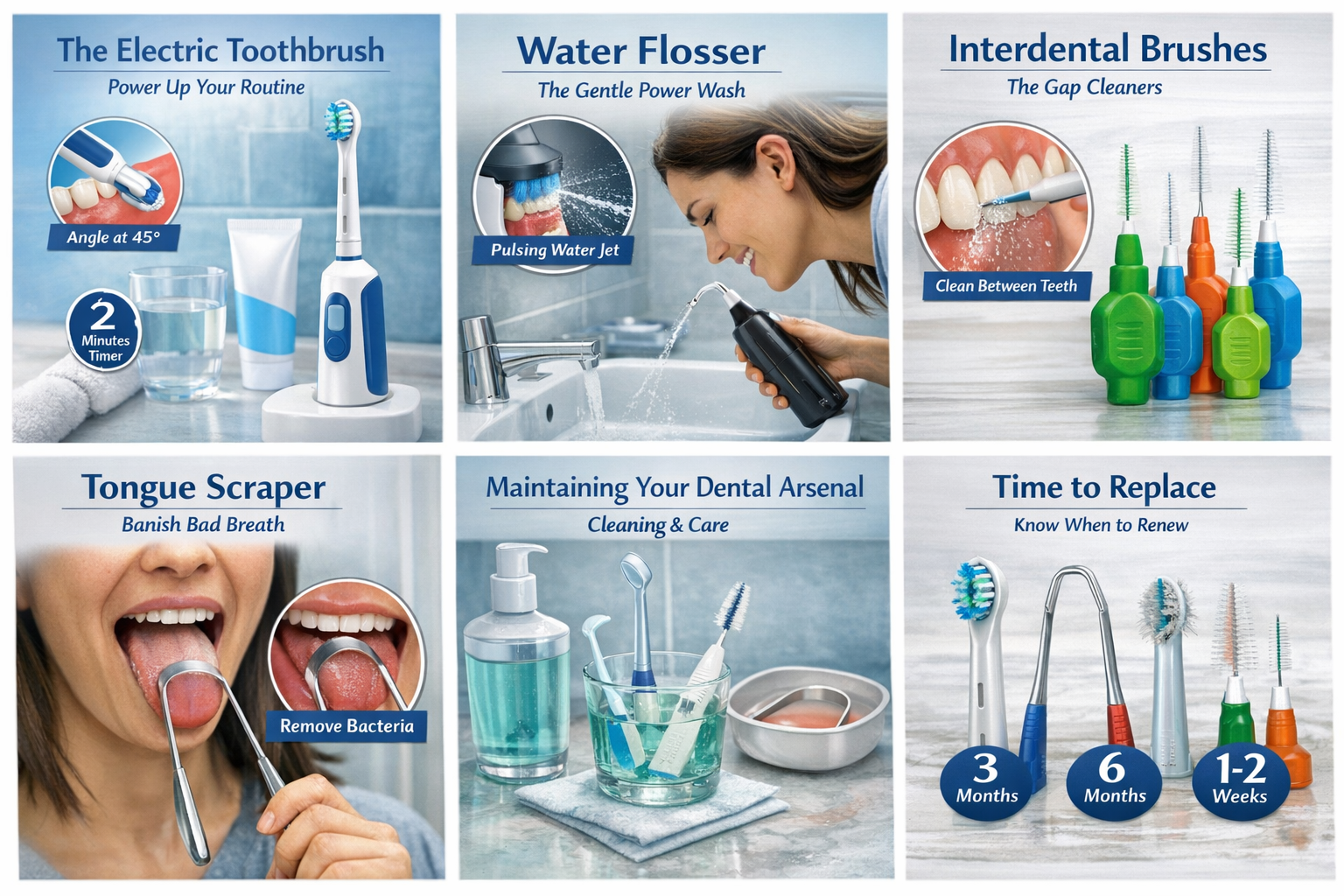
The Electric Toothbrush: Powering Up Your Routine
If you are still using a manual toothbrush, you are doing the work of a hand saw when you could be using a power tool. Manual brushing relies entirely on your technique and stamina. Most people simply don’t brush long enough or with the right motion to effectively remove sticky plaque.
Why It’s a Game Changer
Electric toothbrushes vibrate or rotate at high speeds—some delivering up to 40,000 strokes per minute. This rapid movement creates micro-bubbles that push fluid between teeth, cleaning areas the bristles don’t even touch. Studies consistently show that electric brushes reduce plaque and gingivitis more effectively than manual ones over both short and long periods.
How to Use It Effectively
Using an electric toothbrush requires a shift in mindset. You don’t need to scrub back and forth.
- Let the brush do the work: Hold the brush at a 45-degree angle to your gum line.
- Move slowly: Guide the brush head from tooth to tooth, pausing for a few seconds on each surface.
- Don’t press hard: Many modern brushes have pressure sensors that light up if you are pushing too aggressively. This protects your enamel from abrasion.
- Time it right: Use the built-in timer (usually 2 minutes) to ensure you are cleaning each quadrant of your mouth equally.
Choosing the Right One
Look for a model with a built-in timer and a pressure sensor. You don’t need the most expensive model with Bluetooth connectivity unless you really love tracking data. The most critical feature is a soft-bristled head that feels comfortable in your mouth.
Water Flossers: The gentle Power Wash
Flossing is the step everyone lies to their dentist about. String floss can be difficult to maneuver, painful for sensitive gums, and generally annoying to use. Enter the water flosser—a device that shoots a pressurized stream of water to dislodge food and plaque.
Why It’s Essential
Water flossers are excellent for people with braces, bridges, implants, or crowded teeth where string floss shreds or gets stuck. The pulsating water massages the gum tissue, which increases blood flow and helps reduce inflammation. It is also far easier to use for anyone with arthritis or dexterity issues.
Proper Technique
Using a water flosser can be messy at first. Here is how to keep the water in your mouth and off the mirror:
- Fill the reservoir: Use lukewarm water. Cold water can be shocking to sensitive teeth.
- Lean over the sink: Place the tip in your mouth before turning the unit on.
- Close your lips partially: Let water flow out of your mouth into the sink while keeping the splash contained.
- Trace the gumline: Aim the tip just above the gumline at a 90-degree angle. Pause briefly between teeth.
- Start on low: Begin with the lowest pressure setting and work your way up as your gums toughen up.
Maintenance Tips
Empty the reservoir after every use to prevent bacterial growth. Once a month, run a mixture of water and white vinegar through the unit to clean the internal lines, then rinse thoroughly with plain water.
Interdental Brushes: The Gap Cleaners
Sometimes, water isn’t enough, and string floss is too thin to clean wide gaps effectively. Interdental brushes look like tiny pipe cleaners attached to a handle. They are specifically designed to scrub the sides of teeth in the triangular spaces near the gumline.
The Benefits
These brushes are incredibly effective at removing larger food particles and sticky plaque from between teeth. Because they have bristles, they mechanically scrub the tooth surface in a way that water cannot. They are available in various sizes to fit different gaps, from very tight spaces to wide gaps caused by receding gums.
How to Use Them
- Choose the right size: The brush should slide in with slight resistance but shouldn’t be forced. You might need different sizes for front and back teeth.
- Insert gently: Push the brush into the gap between your teeth, close to the gum.
- Move back and forth: Do this a few times for each space. Do not use toothpaste on these brushes, as it can be too abrasive between teeth.
- Bend if needed: Many brushes have flexible necks to help you reach back molars.
When to Replace
The wire core can wear out and the bristles can fray. Replace these brushes every week or sooner if the wire starts to bend or distort.
The Tongue Scraper: Banish Bad Breath
Brushing your teeth but ignoring your tongue is like washing your car but leaving the windshield muddy. The tongue’s surface is rough and covered in tiny bumps (papillae) that trap bacteria, dead cells, and food debris. This coating is the number one cause of bad breath (halitosis).
Why You Need It
While you can brush your tongue with a toothbrush, a scraper is far more effective. A toothbrush mostly moves the debris around. A scraper is designed to lift and remove the coating entirely. It helps reset your palate, improves your sense of taste, and instantly freshens breath.
Simple Usage Guide
- Stick your tongue out: Go as far as comfortable.
- Place the scraper back: precise placement matters. Start as far back as you can without gagging.
- Pull forward: Apply gentle pressure and pull the scraper to the tip of your tongue in one fluid motion.
- Rinse and repeat: Rinse the “gunk” off the tool and repeat the scraping motion 2-3 times until the tongue looks pink and clean.
Choosing Your Tool
Stainless steel scrapers are generally better than plastic ones. They are easier to sanitize, more durable, and typically have a smoother edge that creates a better seal against the tongue.
Maintaining Your Dental Arsenal
Investing in these tools is useless if you let them become breeding grounds for bacteria. Proper maintenance ensures they keep your mouth healthy rather than introducing new germs.
Cleaning Basics
- Rinse thoroughly: After every use, rinse bristles and tips under hot water to remove debris and toothpaste.
- Air dry: Store tools upright in a cup or holder where they can air dry completely. Bacteria love moisture, so never cover a damp brush head with a plastic cap.
- Deep clean: Every few weeks, soak toothbrush heads and scraper tools in an antibacterial mouthwash or a denture cleaner solution.
Replacement Schedule
- Toothbrush heads: Every 3 months, or sooner if bristles splay.
- Water flosser tips: Every 3-6 months.
- Interdental brushes: Every 1-2 weeks.
- Tongue scrapers: Replace plastic ones every 3 months; steel ones can last years with proper cleaning.
Building a better oral hygiene routine doesn’t mean spending hours in the bathroom. It means using smarter tools that do the heavy lifting for you.
An electric toothbrush ensures a thorough scrub, a water flosser or interdental brush tackles the hidden spaces, and a tongue scraper handles the bacteria that cause odor. By integrating these usable home-based tools into your daily habits, you aren’t just cleaning your teeth—you are investing in your long-term health.
Start with one upgrade, perhaps the electric toothbrush, and work your way up. Your dentist will notice the difference at your next checkup, and more importantly, so will you.
Meta Title: Best Home Dental Tools for a Healthier Smile (2024 Guide)
Meta Description: Upgrade your oral hygiene with these essential home dental tools. Learn how to use electric toothbrushes, water flossers, and more for a perfect clean.